Provider Profile: Positive Behavior Supports
Snapshot
Most recent review: October 2026
Provider Name: Positive Behavior Supports (PBS)
Footprint: Multi-state
Scale: Large, multi-site provider
Care Model: Primarily in-home and community-based ABA services
Growth Posture: Organic expansion
Operating Context
Positive Behavior Supports (PBS) is a large, multi-state ABA provider emphasizing home- and community-based service delivery.
Unlike center-intensive providers, PBS operates through a geographically distributed care model that brings services into family homes, schools, and community settings. This approach places significant operational demands on workforce coordination, clinical supervision, scheduling, and regional management.
PBS represents a distinct operating model within the large-provider segment: expanding access through distributed clinical teams rather than relying primarily on physical center infrastructure.
Its scale creates a need to balance localized service delivery with consistent clinical oversight, administrative processes, and operational visibility across markets.
Operational Signals
Staffing & Supervision
PBS emphasizes localized clinical teams supported by regional and national structures. Its distributed model requires coordination among behavior technicians, supervising clinicians, families, and administrative personnel across multiple service locations.
The geographic dispersion of its workforce makes clinician availability, supervision capacity, and regional staffing alignment important operational considerations.
Intake & Access
PBS promotes access to ABA services in home and community settings, allowing families to receive services outside a traditional center-based environment.
Across a multi-state footprint, intake coordination must account for geographic coverage, clinician availability, payor requirements, and family scheduling preferences. Public information does not establish consistent intake timelines or conversion performance across markets.
Scheduling & Delivery
A predominantly home- and community-based model introduces scheduling complexity distinct from center-based operations.
Service delivery depends on matching clinicians to families across geographic areas, managing travel considerations, coordinating supervision, and responding to changes in family or staff availability.
At PBS's scale, these requirements make workforce utilization and scheduling coordination important operational disciplines, although specific performance measures are not publicly established.
Revenue / Payor Context
PBS operates across multiple state and commercial insurance environments, exposing the organization to varying reimbursement rates, authorization requirements, documentation standards, and regulatory obligations.
The distributed service model also creates different cost and utilization considerations than center-based care, particularly around travel, scheduling density, cancellations, and supervision.
Publicly available information does not establish PBS-specific revenue performance, margins, or payor mix.
Technology Signals
Practice Management: Not publicly confirmed
Clinical Documentation: Not publicly confirmed
Scheduling / Workforce Management: Not publicly confirmed
Data & Analytics: Not publicly confirmed
PBS's operating model creates substantial requirements for coordinating geographically distributed services, including scheduling, clinical documentation, authorization management, billing, and workforce oversight.
Technology infrastructure is particularly relevant for providers operating at this scale because operational information must be consolidated across regions while supporting local service delivery.
The specific platforms used by PBS, their integration architecture, and the degree of centralized operational visibility have not been independently established through public information.
Why This Provider Appears in Coverage
Positive Behavior Supports is an important reference point for understanding how large ABA providers scale predominantly home- and community-based services.
Its distributed operating model offers a useful comparison with center-based organizations, particularly when examining workforce deployment, scheduling complexity, clinical supervision, and the technology infrastructure required to coordinate services across multiple states.
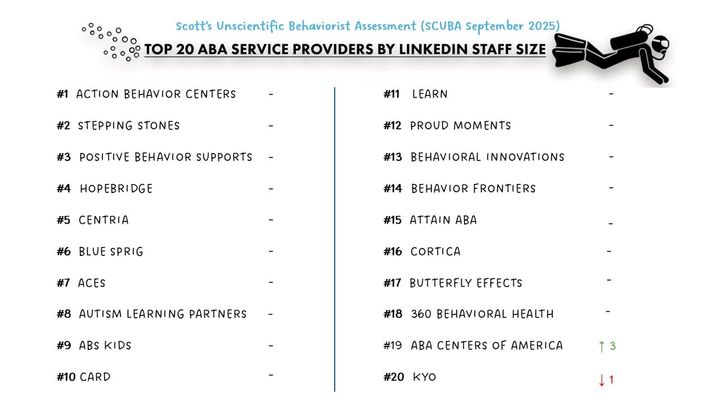
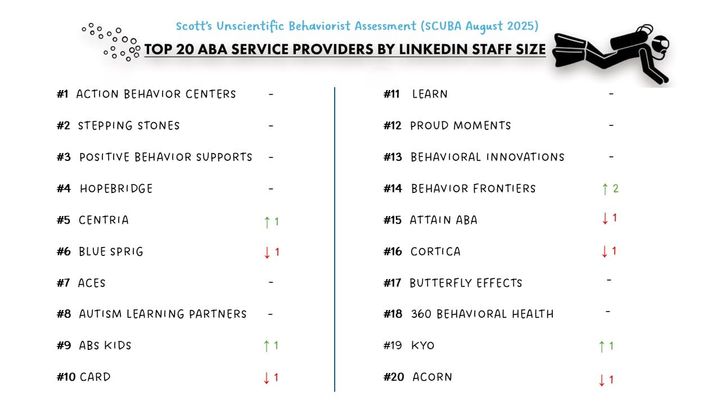
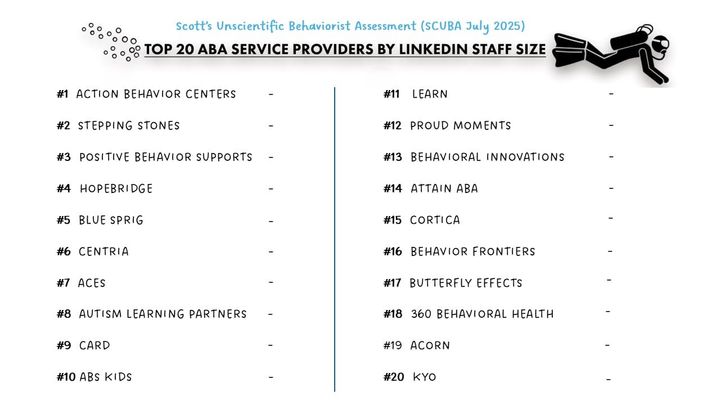
PBS is also included in Mission Viewpoint's broader tracking of ABA provider staffing and market activity.
Disclosure
This Provider Card is based on publicly observable information and directional operating analysis. Public materials may lag real-time organizational changes, particularly during periods of growth, restructuring, or technology transition.
Descriptions of operational requirements reflect characteristics of the provider's service model and should not be interpreted as verified measures of PBS's internal systems or performance.